Email-based attacks are not going anywhere. The Anti-Phishing Working Group (APWG) observed more than 3 million phishing attacks in the first three quarters of 2025, with Q2 marking the highest quarterly volume since late 2023.
What is changing is how attackers use email. As we move into 2026, evolving tactics are exposing the limitations of traditional email security approaches. Below are five email security predictions that will shape how organizations need to think about email defense in the year ahead.

Prediction #1: GenAI-Powered Phishing Becomes Nearly Undetectable
AI-powered phishing has moved beyond creating more believable language or fixing those pesky typos that used to make phishing emails detectable. Threat actors are now using generative AI to produce highly convincing malicious emails quickly and at scale. These communications are capable of mimicking the style, tone, and behavior of trusted colleagues or partners, giving the social engineering attack new ways of meeting its mark.
Now these emails can incorporate real internal business context, such as existing (and trusted) projects and suppliers. This makes them more difficult to spot, both for users and for software. And text-based emails are no longer the only way to incorporate these tactics. New approaches include spoofed images, QR codes, fake videos, or even voice messages.
In other words, social engineering has gotten an upgrade. When each false message is tailored to the individual receiving it and contains relevant contextual information, pattern-based detection and reputation-driven filtering are significantly less effective.

Prediction #2: Autonomous, Adaptive Attacks with Agentic AI
A second major shift we’re seeing is attackers using agentic AI to run attack campaigns faster and more effectively. Instead of relying on manual campaign management, AI-powered malware and agents autonomously probe email defenses, identify vulnerabilities, and adapt their tactics in real-time.
Once the agents determine which messages are delivered (or not), these systems can modify payloads, delivery mechanisms, or timing and relaunch attacks without the need for human oversight. Over time, they can even learn how to appropriately bypass controls.
These quick-hit attacks are a sore spot for email security tools that rely on delayed analysis, external lookups, or human review. There is no time to provide this type of analysis for threats that are constantly evolving.
Prediction #3: Mail Bombing as an Obfuscation Tactic
Mail bombing is the act of flooding inboxes with thousands of benign emails, and it’s increasingly being used by bad actors as a distraction and obfuscation technique.
In 2026, we’ll continue to see attackers use these email floods to hide key alerts such as password reset emails or login notifications from compromised services. The volume of messages can degrade SOC visibility, making it harder for traditional email security tools to identify security issues against all of the noise.
In short, as inboxes become overwhelmed, both users and security teams are more likely to miss compromising messages.

Prediction #4: BEC Attacks are Harder to Detect
You’ve seen the emails. Supposed communications from your CEO or finance department that are really underlying threats. Traditional Business Email Compromise (BEC) attacks took advantage of these executive and high-power roles to drive authority. But today, attackers are increasingly compromising or spoofing non-executive internal accounts. Your co-worker John’s email could be from bad actor Josephine.
BEC attacks in 2026 will seamlessly blend into existing business conversations and email threads making them more difficult to detect. These messages appear authentic because they are embedded in real workflows and carry valid internal context.
This is a switch for email security, because it now means that internal communications are no longer trustworthy. It also means there’s a growing need for continuous evaluation of intent, not just identity.

Prediction #5: Trusted Services are No Longer Trustworthy
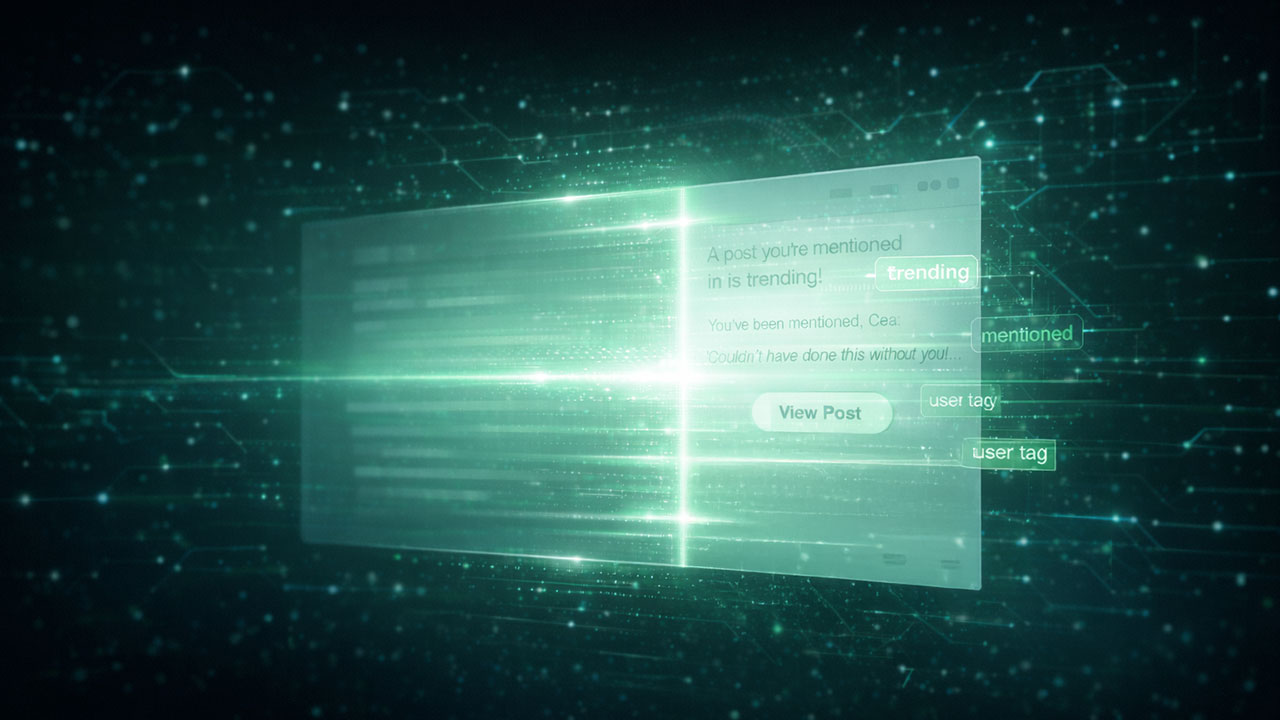
Another growing attack vector is emerging from an unexpected place: trusted software platforms. Services like DocuSign, SharePoint, QuickBooks, and similar platforms have now been incorporated into bad actors’ workflows. Attackers use these services to send modified or spoofed notifications containing malicious links or prompts.
Because the sender and platform are legitimate, both users and automated security systems are more likely to trust the message. This makes credential theft and malware delivery easier, especially when combined with realistic timing and contextual cues.
What These Trends Mean for Email Security in 2026
These emerging attack vectors point to a clear shift for 2026: email threats are becoming more contextual, more autonomous, and more difficult to identify. Security approaches built around static rules, probabilistic scoring, or cloud-based analysis face increasing challenges as attacks adapt faster and operate with minimal human involvement. Speed, locality, and deterministic decision-making are now critical for these new types of threats.
- First, consider speed. When attacks can probe defenses, learn from failures, and relaunch with improvements autonomously, reliance on delayed analysis or external cloud lookups introduces friction that attackers can exploit. Security decisions need to be made automatically, in real time, directly within the email flow.
- Second, context must be evaluated deterministically, not probabilistically. Highly targeted, low-volume attacks are specifically designed to evade reputation-based scoring and statistical models. Security teams need consistent, explainable outcomes that can be trusted during investigation, auditing, and incident response, particularly around internal communications that have historically been assumed trustworthy.
- Third, data exposure is a real risk. Offloading email content to third-party cloud services or large language models expands the attack surface and complicates compliance, especially in regulated environments. Keeping sensitive data inside the customer environment is now a core security initiative.
- Finally, layered defenses must work together, not in isolation. No single detection technique is sufficient when attackers combine the new attack vectors now available. Effective email security depends on multiple, purpose-built layers that continuously evaluate intent across content, behavior, and context.
In 2026, organizations should assess their email security infrastructure based on architectural resilience: how quickly threats are analyzed, where decisions are made, how predictable outcomes are, and how well the system adapts as attacker behavior evolves.
Do you want to know 3 things your organization can do right now to improve email security?
Quick Links
Newsroom Reports Why Libraesva Compare Libraesva SecondSight AI Semantic AI Customer Reviews Pricing InfoRelated Product